
master’s thesis
MATERIAL LEGACIES AS A RESULT OF DISTURBANCE MAY INDIRECTLY ALTER THE PHYSIOLOGY OF PORITES RUS
My master’s thesis is investigating how disturbance events on coral reefs (bleaching and Crown-of-Thorns seastar outbreaks) are changing overall reef biogeochemistry, and how those changes in biogeochemistry indirectly impact the physiological rates of the tropical coral, Porites rus. The physiological rates I am investigating are net photosynthesis, calcification, and respiration. By creating community treatment tanks to mimic the reef composition post-disturbances, I was able to monitor how different dominant benthic communities change biogeochemistry over time (25-day experimental period). Data analysis for this project is still ongoing, but if you’d like to chat about my research more in depth, please feel free to reach out to me: laurel.diaz.833@my.csun.edu

Porites rus and massive Porites spp 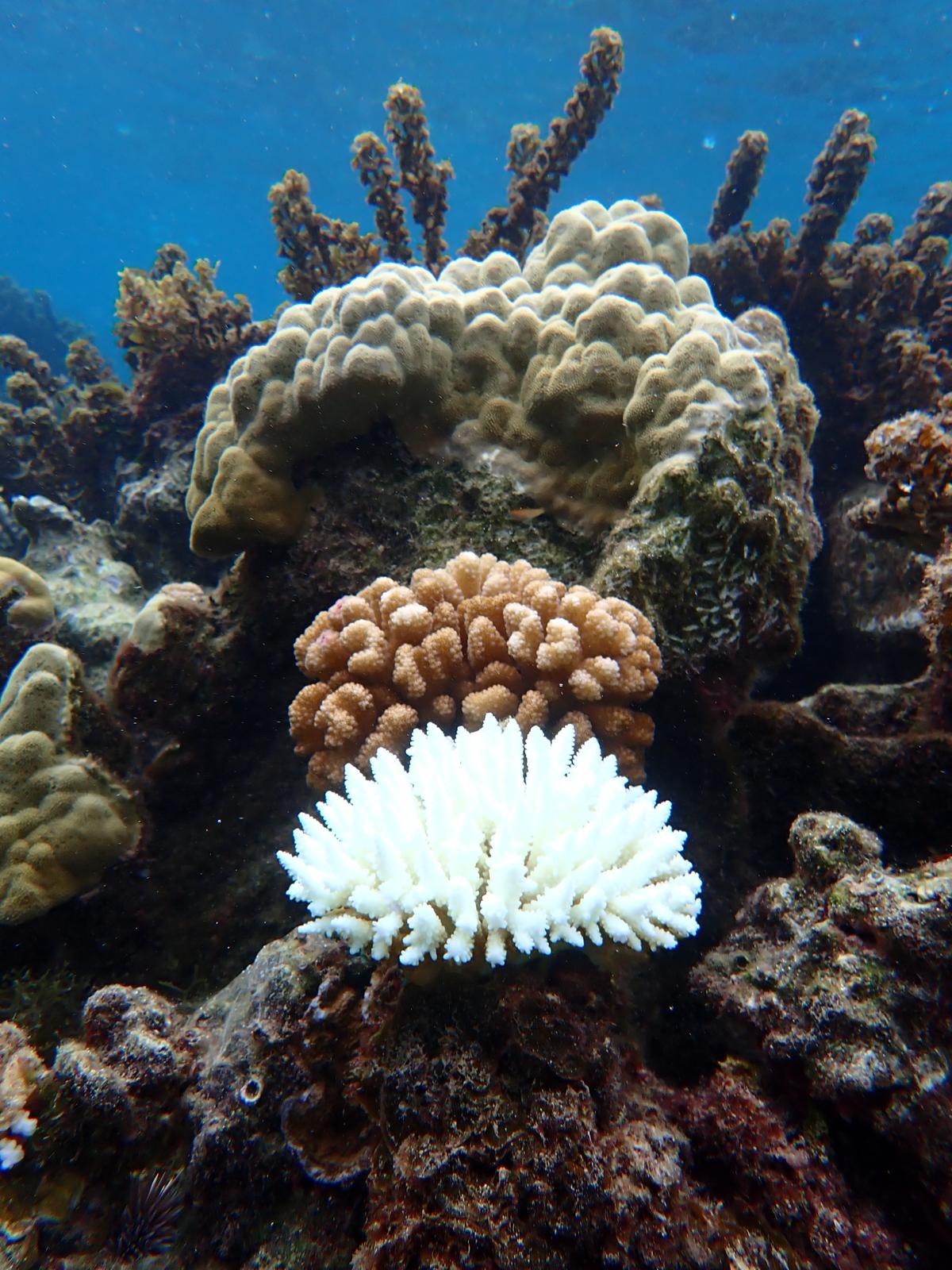
Photo illustrating the shifts in dominant benthic communities over time (Photo: Rayna McClintock, UH Mānoa) 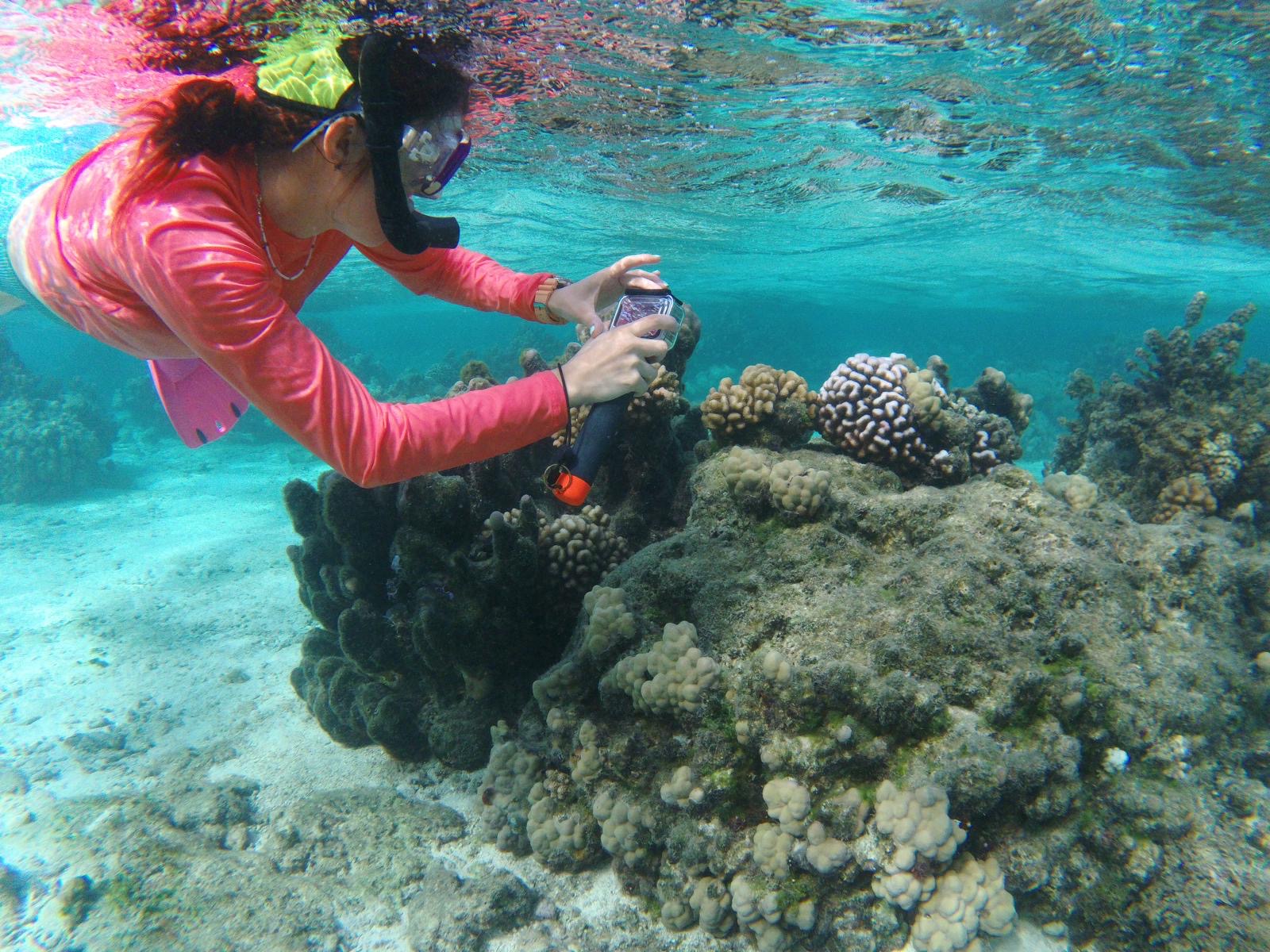
Healthy vs bleached Pocillopora meandrina 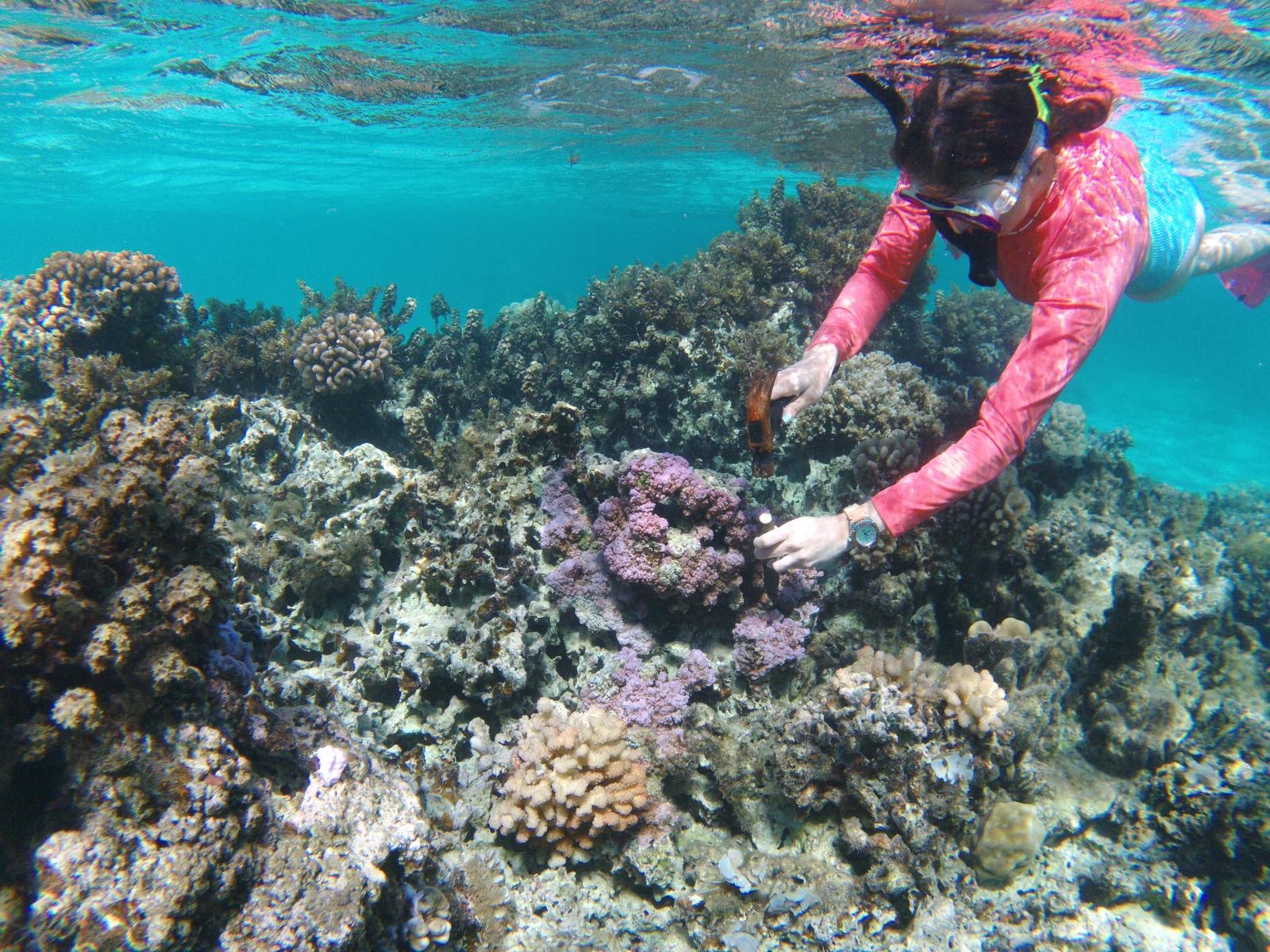
Montipora spp 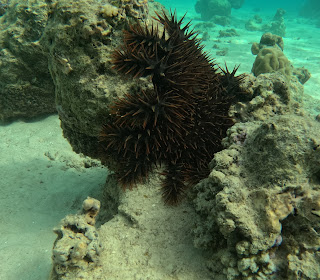
Crown-of-Thorns seastar on the backreef in Mo’orea 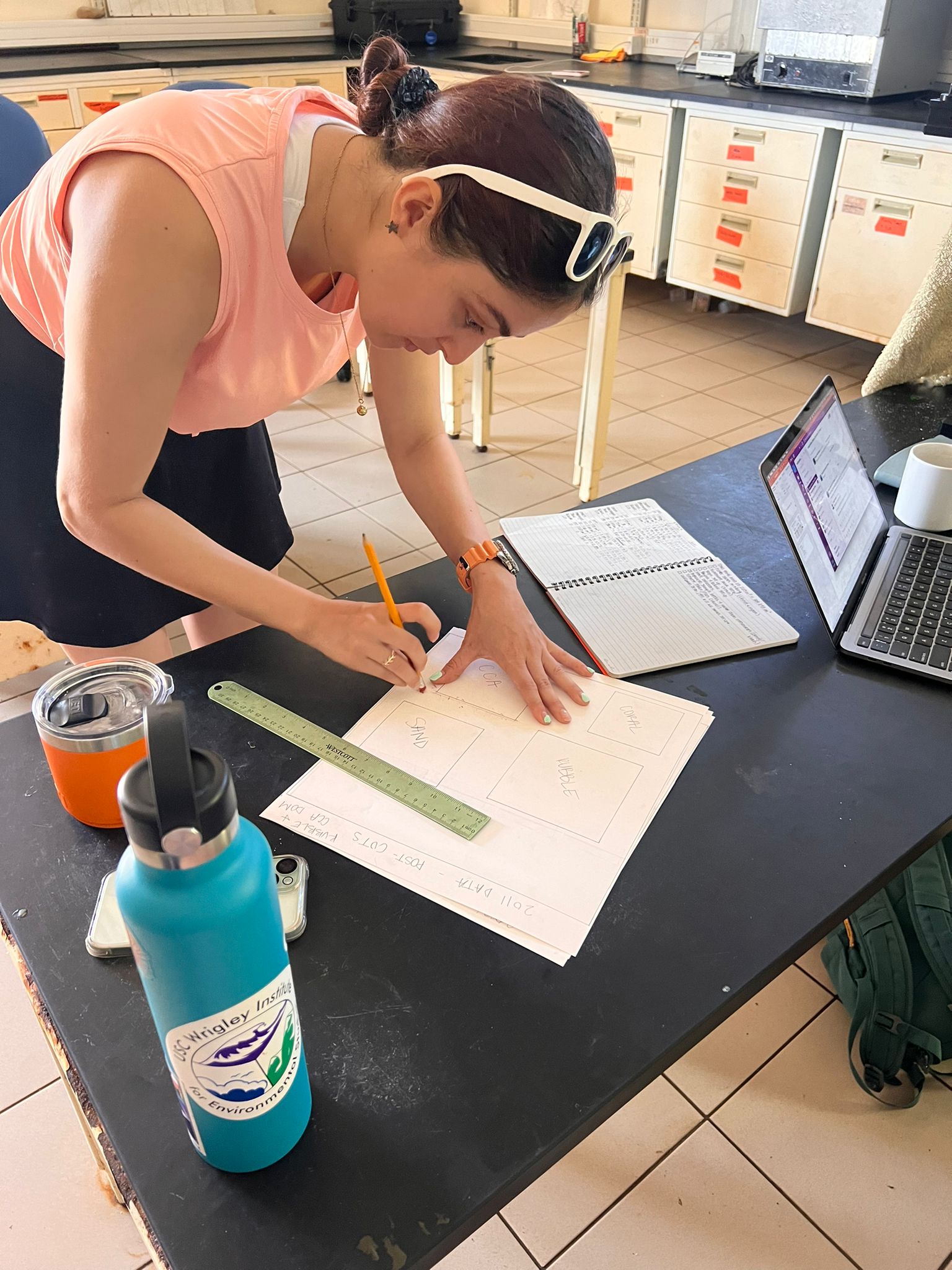
Planning out community tanks 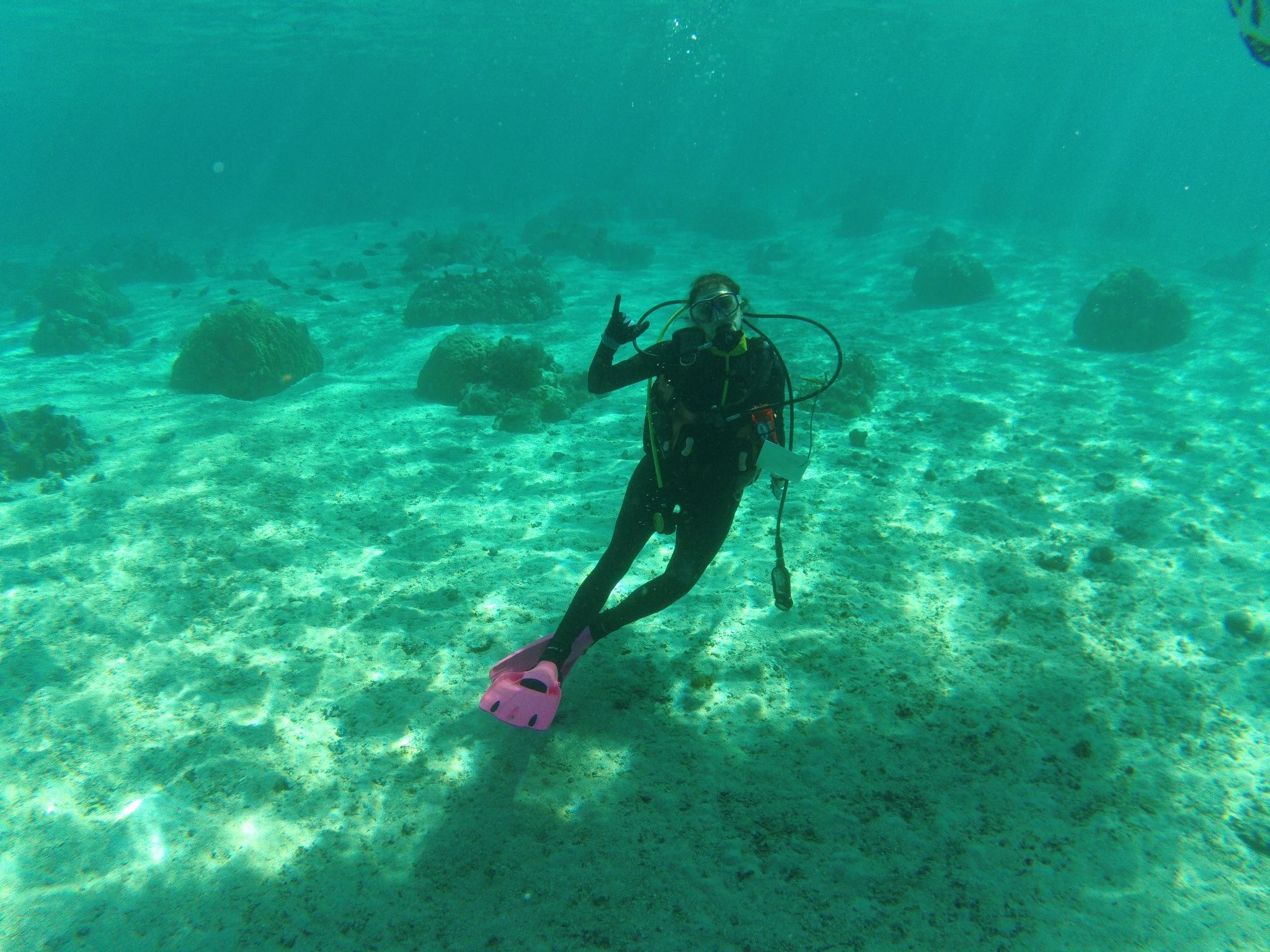
First dive of field season! 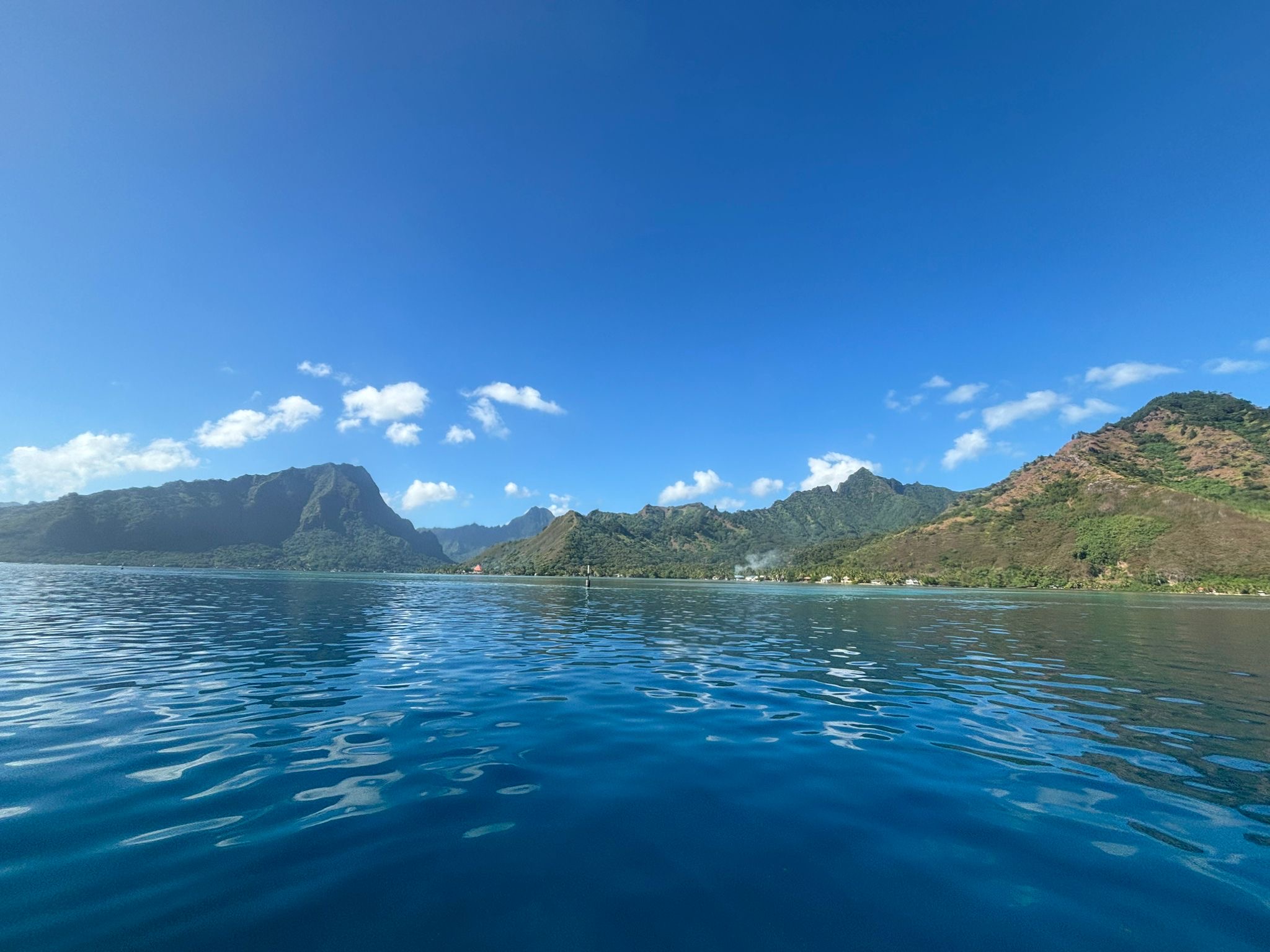
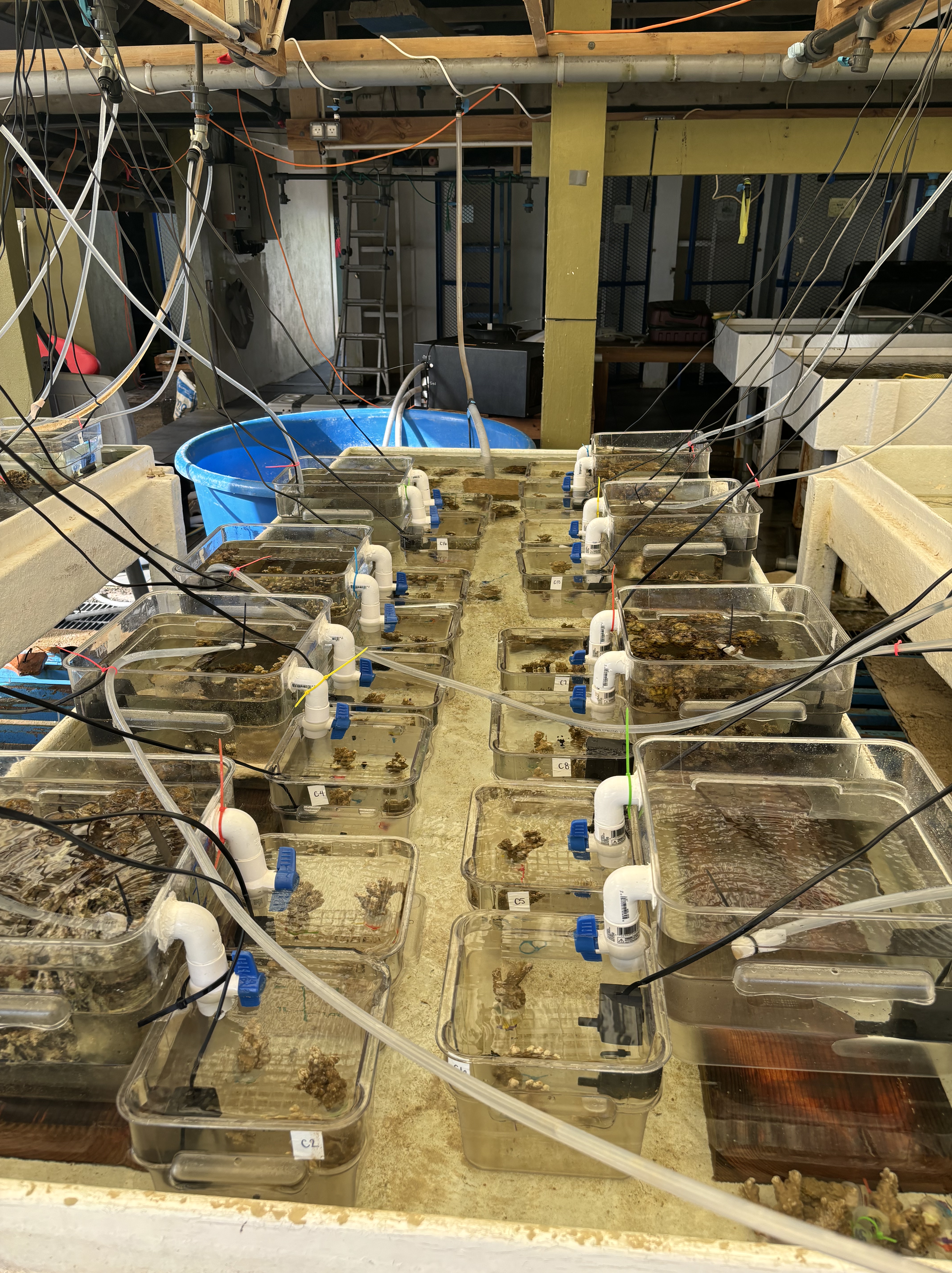
Treatment tank set up 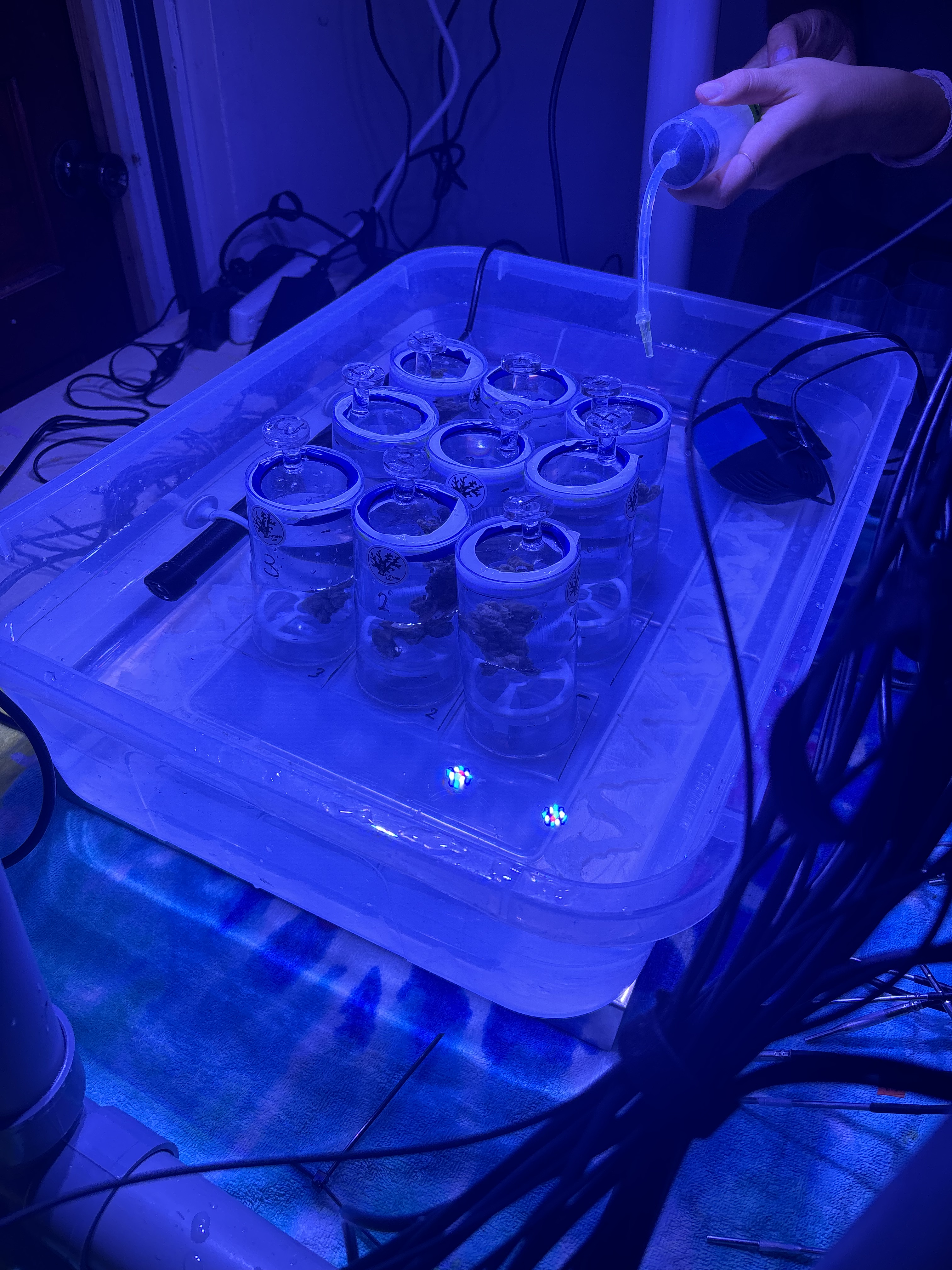
Respirometry 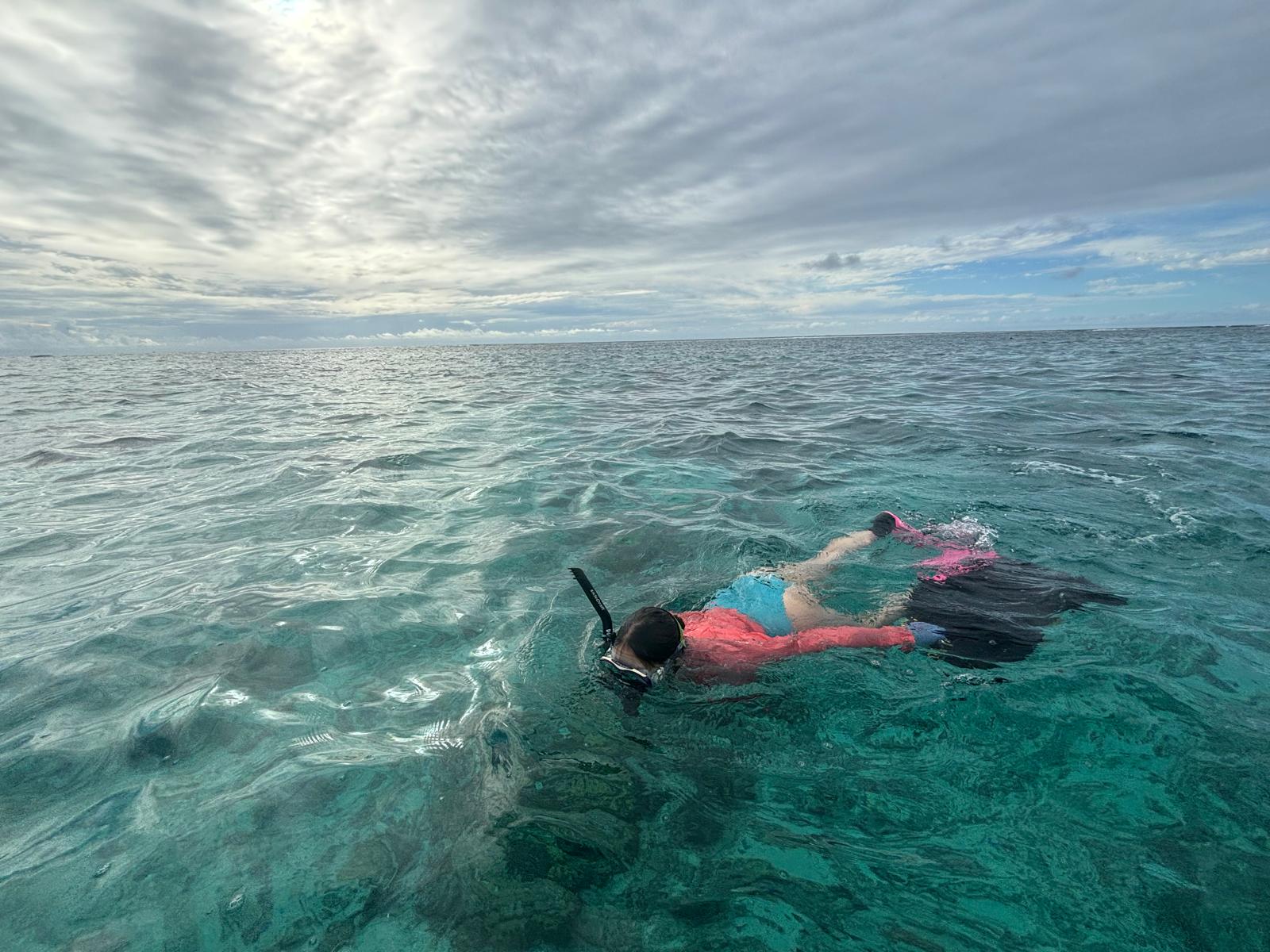
Collecting Turbinaria ornata on snorkel
undergraduate thesis
USING HYDROACOUSTICS TO EXAMINE THE RELATIONSHIP BETWEEN THE VERTICAL DISTRIBUTION OF FISH IN RESPONSE TO ENVIRONMENTAL FACTORS
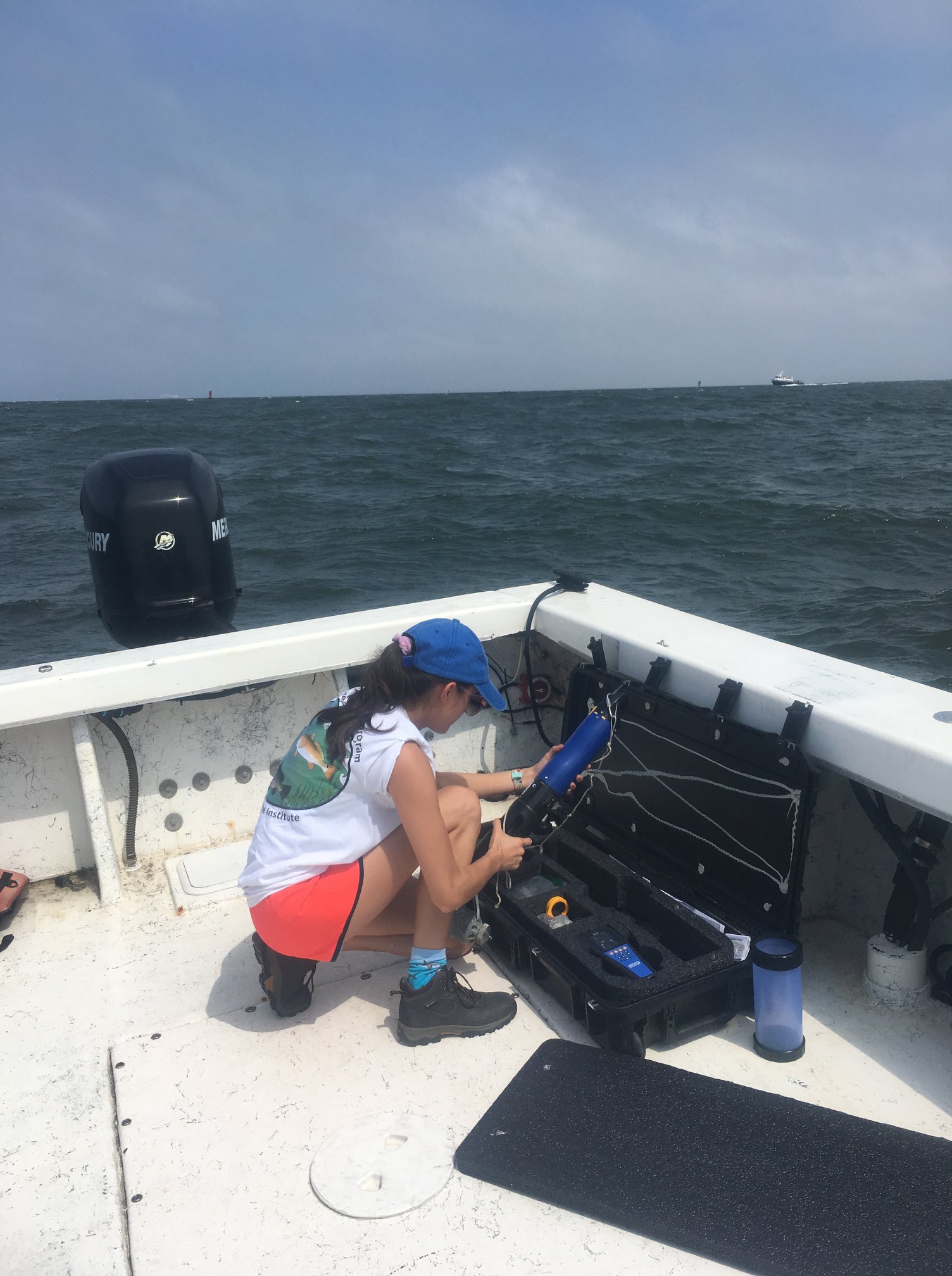
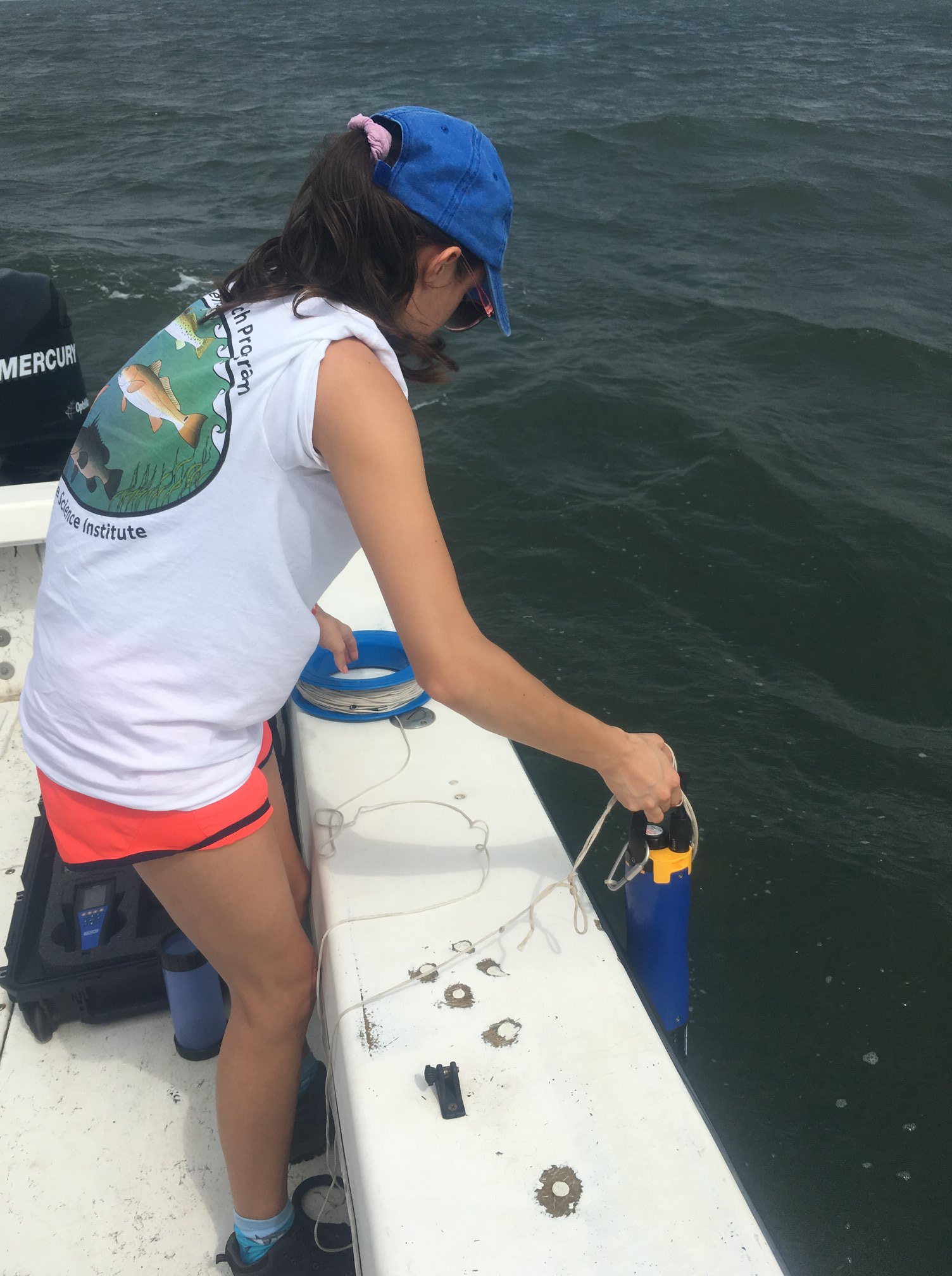
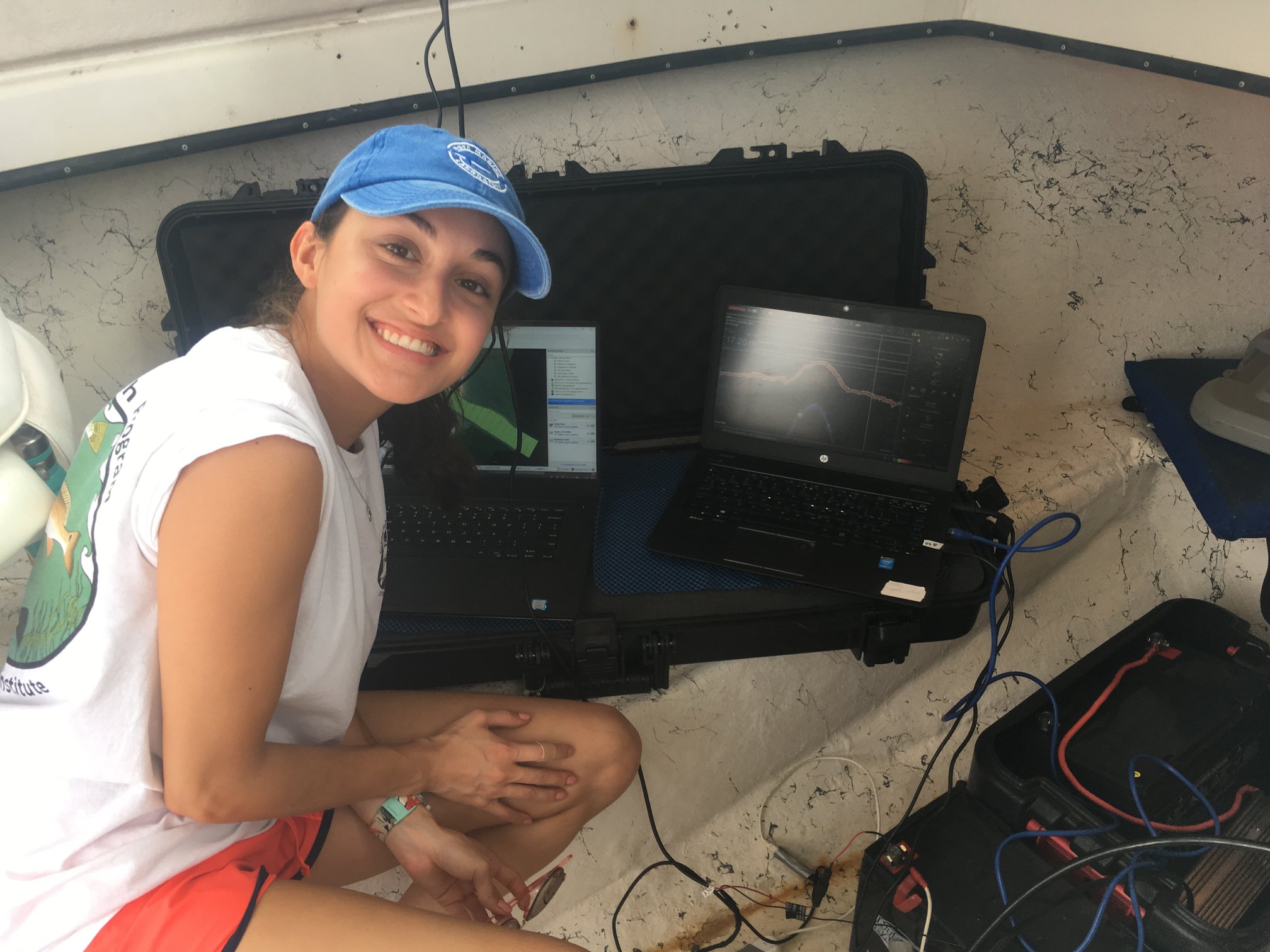
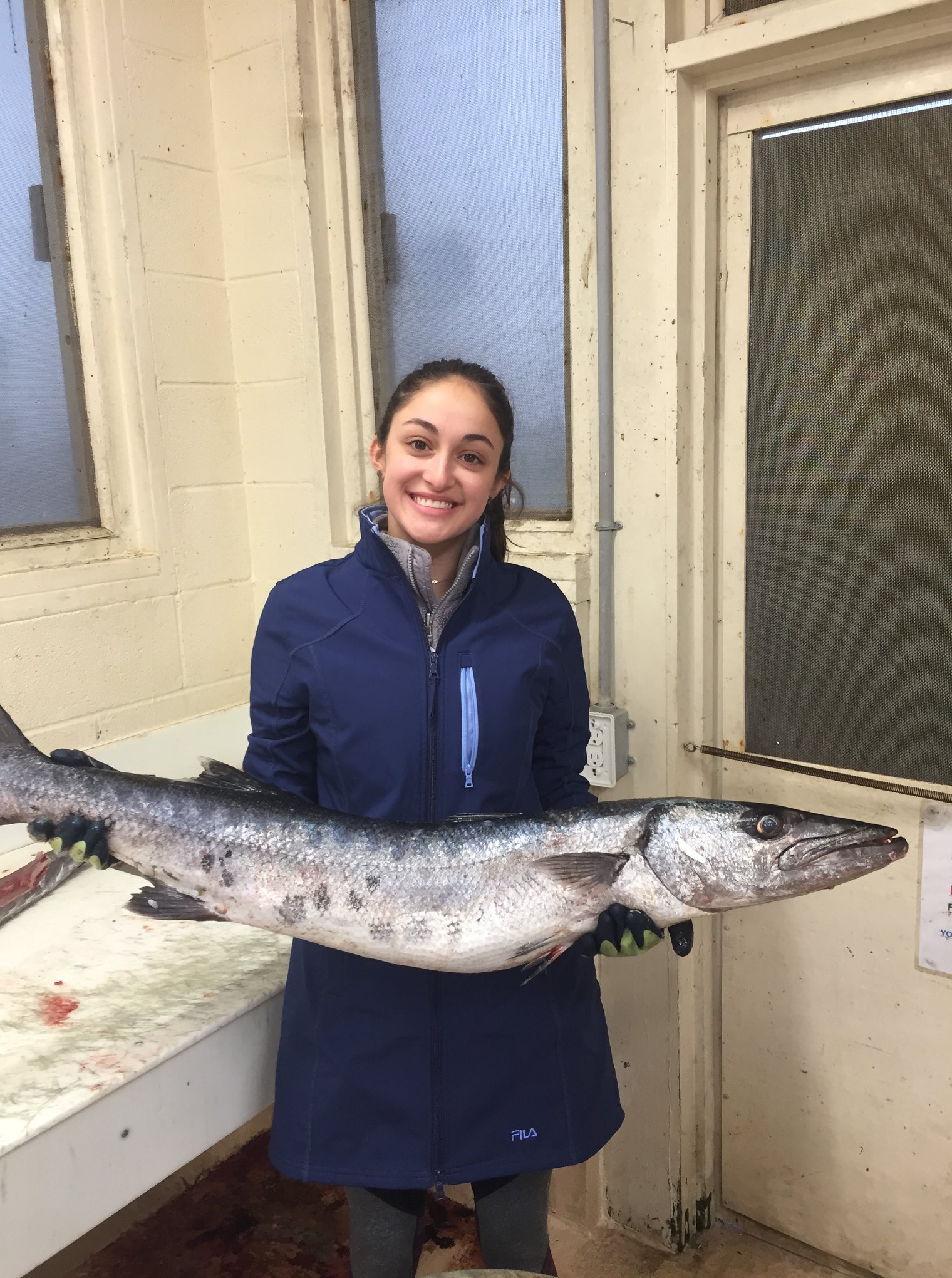
During my time as undergrad at the University of Texas at Austin, I participated in the Semester by the Sea program, where I worked closely with Dr. Brad Erisman and Dr. Derek Bolser (both currently affiliated with NOAA) on their lab’s research, and created my own research project as my undergrad thesis. As a fisheries ecology lab located right on the coast of the Gulf of Mexico, I decided on a project examining how environmental changes in the Aransas Shipping Channel was affecting vertical distributions of fish. Through hydroacoustic surveys and regression analysis, I determined that summer conditions (low dissolved oxygen, high salinity, and warm temperatures) have the biggest influence on fish distribution within the shipping channel. Additionally, drastic changes in fish’s height off bottom (HOB) were indicative of the influx/efflux of summer spawning species. My work and findings on this project were used for a larger project in the lab, and ultimately resulted in my first co-authored publication in Estuaries and Coasts (which you can read here).



undergraduate RESEARCH ASSISTANT
HURRICANE-DRIVEN ASEXUAL REPRODUCTION IN MASSIVE BOULDER CORALS IN THE FLORIDA KEYS
My first exposure to scientific research and laboratory work was when I joined Dr. Mikhail Matz’s lab at the University of Texas at Austin my Sophomore year. As an undergraduate research assistant, I extracted DNA from fragments of massive boulder corals (genus Orbicella) that had been fragmented after Hurricane Irma made landfall in the Florida Keys in 2017. The questions that this project sought to answer were 1) whether hurricanes can cause boulder species to fragment and 2) if so, do these fragments survive? Our goal was to identify species of Orbicella and assess clonality. We ultimately extracted DNA from 432 samples, which were then genotyped using 2b-RAD sequencing. This study found that Hurricane Irma resulted in substantial coral fragmentation and 8 different species of storm-generated Orbicella fragments were identified, of which two boulder species were the most dominant: Orbicella annularis and Orbicella faveolata. These results showed that hurricanes can fragment boulder corals which then survive, suggesting that hurricanes could play a key role in asexual reproduction of massive boulder corals.
 CoralLaurel